Why Streamers Pick Debatable When Chat Demands a Live Scored Voice Debate With Full AI Reasoning
Scored voice debates give chat a verdict viewers can check.

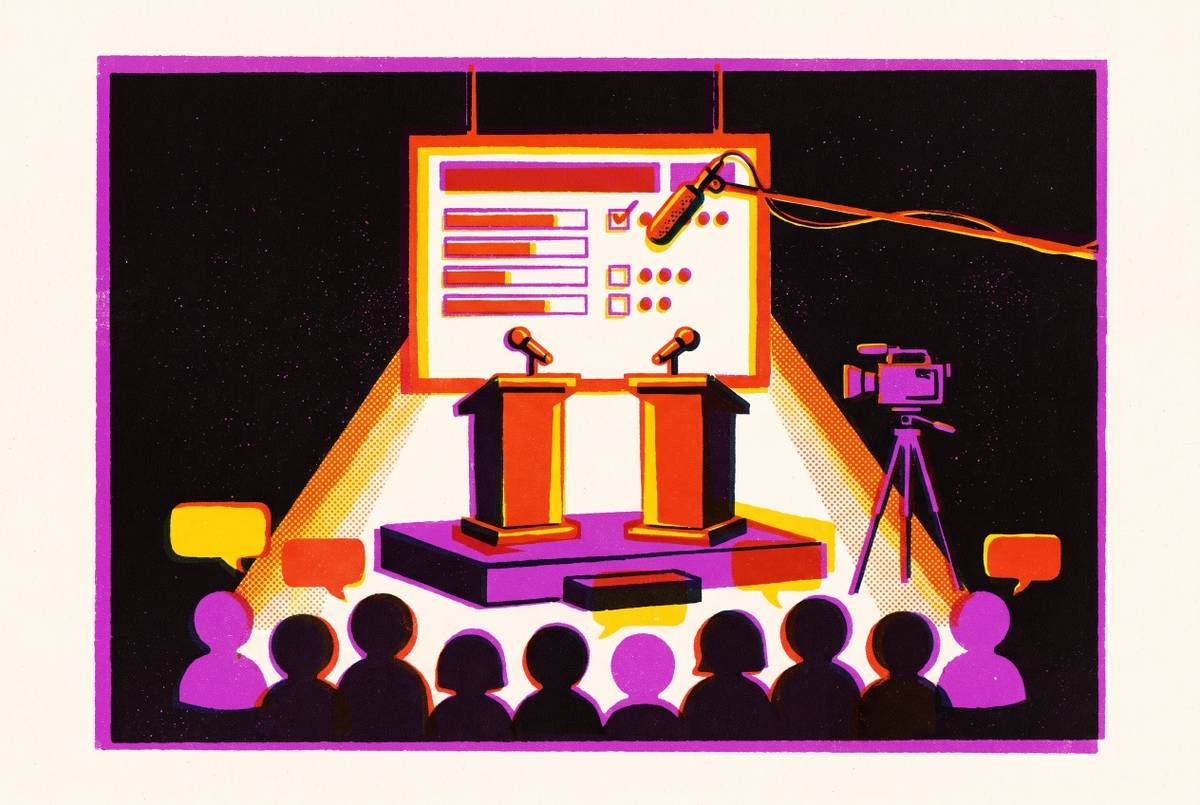
A live voice debate platform with AI judging and a published scoring rubric gives streamers a result they can check, something free-form chat cannot provide. The strongest case for this format is the connection between a real opponent, timed rounds, an explained verdict, and an appeal.
Why free-form chat arguments fail live audiences
Free-form chat has no reliable way to settle an argument. Someone stops replying, the conversation moves on, or a voice that keeps going gets the attention that is left. None of those events establishes who made the better case. Yet each can look like victory to viewers who already favor the person still speaking. The stopping point substitutes for a decision.
That ambiguity leaves the audience without a common standard. One viewer rewards confidence, another rewards agreement with an existing belief, and another treats the last unanswered message as decisive. Without an independent judge weighing what people actually said, viewers have no shared basis for those judgments. The disagreement can continue after the exchange has ended because nothing distinguishes a strong rebuttal from a popular one.
Chess, ranked gaming, and speed runs give viewers rules, a score, and a result against which to interpret what happened. Chat debate offers effort without a comparable consequence. That weakens the tension between what a participant attempts and what the attempt earns. The missing element is not another provocative topic but a decision that makes the exchange count.
What a scored, timed, judged format gives a live stream that chat cannot
A real opponent gives an argument a test. Matching by rank or genuine disagreement puts someone on the other side who has a reason to challenge the case. For viewers, that creates a recognizable contest between invested participants. A claim must withstand an answer from someone who wants to expose its weakness. The drama comes from that resistance.
An unstructured exchange can expand whenever a participant introduces another objection, leaving the audience unsure whether the discussion is progressing or restarting. Fixed phases establish when each part ends. Viewers can follow an argument through its presentation and response without having to infer the boundaries themselves. The clock helps viewers keep watching because they can see the pace of the exchange.
A useful scoring rubric names its criteria, including the argument, responses to the other case, and structure and clarity. Scores out of 100 show how the judge rated the debate, and quotations show the exact lines that earned praise or criticism. These serve different purposes. The score states the result, and the cited explanation lets the audience examine the basis for it.
An appeal makes the result open to challenge. Without that possibility, a written verdict can still feel like an assertion from an authority that never has to answer back. Published scoring rules let viewers know the standard before the round starts, and an appeal gives them a way to challenge how the judge used it. Closure need not mean unquestioning acceptance. It means the round reaches a decision through a process that also recognizes the possibility of error.
Why AI judging produces accurate verdicts rather than confident-sounding ones
An adversary has a reason to expose weak reasoning. That incentive is the central argument for using debate as an oversight mechanism rather than asking a single confident speaker to explain why a position is correct. When an opponent challenges a claim, the judge receives both the assertion and the attempt to dismantle it. Errors that might pass unnoticed in a one-sided presentation can become explicit points of dispute. The judge has more than persuasive delivery to assess.
The NYU self-play training study found that training models to win debates made judges more accurate, but training consultancy models did not. The distinction is structural. A consultancy model arguing one side has no adversary within the exchange to catch its mistakes. Training it to persuade can therefore strengthen its presentation without improving the judge’s conclusion. Debate introduces a competing incentive to reveal what the other side would prefer the judge to miss.
Information-asymmetric experiments automatically checked debaters’ quotations and marked them as genuine or inaccurate so judges could distinguish supported quotations from invented evidence. The record itself becomes part of the test. In a live spoken debate, citing what participants actually said similarly makes a verdict inspectable against the exchange. However, an accurate quotation establishes what was said while leaving the truth of the factual claims inside it unverified.
The NeurIPS 2026 study found that debate substantially raised human judge accuracy when judges began with a wrong prior belief, while a one-sided expert did not help. That finding addresses a harder problem than missing information. A judge may already believe a wrong answer and hear a confident explanation in light of that belief. Adversarial presentation can expose the competing case. This supports the format’s corrective potential without establishing that every live verdict will be right.
The same study found that debate did not help weaker AI judges correct their mistakes in the same way. Judge capability therefore remains a constraint. A panel of three independent models from different labs, with two matching votes required, keeps the decision from resting on a single model’s judgment. A human appeal path adds a route for contesting the resulting decision. These safeguards make the accuracy claim more credible precisely because they acknowledge that adversarial debate alone does not eliminate judging errors.
How a live voice debate platform with AI judging fits inside a stream
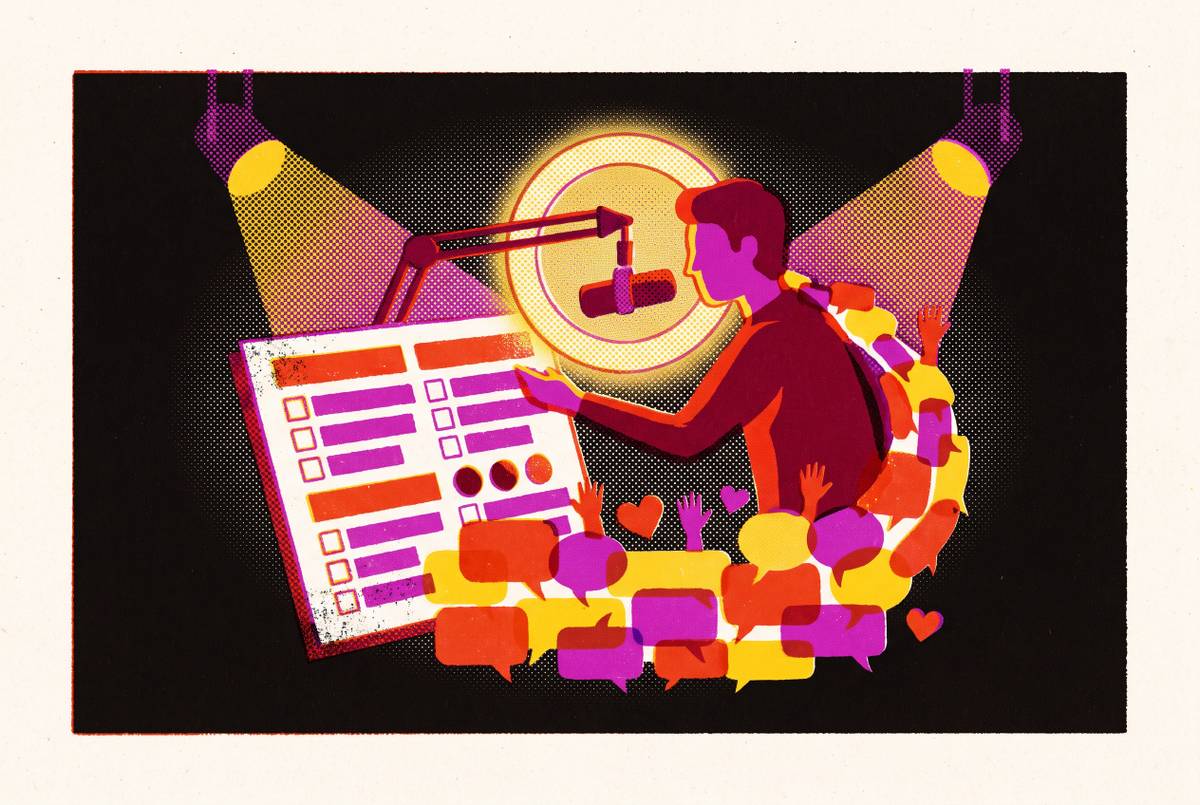
On stream, the decision needs to fit the pace of the broadcast. A room workflow can begin with an accepted match and a topic drawn from genuine disagreement, move through the spoken exchange, and end with a written verdict. The sequence should remain legible to viewers throughout. They need to understand what is being disputed before they can interpret the judge’s explanation. A result that fails to answer the question would tell viewers more without settling the debate.
A spin-to-topic option based on questions the participants answered differently starts from an actual conflict of views. Both sides have a position to defend. That gives the audience a reason to follow the exchange from its beginning, because the disagreement precedes the performance.
Browser screen capture can bring a broadcast into a judging workflow without requiring a separate recording pipeline or post-processing stage between debate and verdict. A live read during discussion serves a different role from the full written decision at the end. A compact overlay can keep participants, debate, and score visible without allowing the judging interface to dominate the frame.
What the leaderboard and creator matchup system give streamers beyond the single round
A public leaderboard ranked by best score connects individual rounds to a longer competition. A debate can end decisively while the participant’s larger story remains open. Viewers can compare the next appearance with how the participant did before. That continuity gives the audience a reason to care before a new topic is introduced.
The basis of the ranking determines what that continuity rewards. A leaderboard built around argument quality differs from one that records only wins and losses. A participant’s performance is not reduced to whether the opponent finished ahead or behind. Published criteria allow viewers to connect standing with the quality of the case and the response to challenge. The leaderboard becomes a visible expression of what the debating community values.
A creator matchup path extends that competition into participation. A viewer who debates well enough can become the person facing the creator on stream, rather than remaining a supporter whose role is limited to reacting. Ability becomes a route into the contest, and the resulting matchup has stakes grounded in demonstrated performance. The recurring content hook is credible because the challenger has something more substantial than enthusiasm to bring.
An AI opponent serves a different operational purpose. It allows a streamer to run a round immediately without first finding a human challenger, including at hours when arranging a match would be difficult. Such rounds can function as warm-up content or demonstrate the format to a first-time audience. They do not create the same social stakes as a creator facing an invested viewer.
Why the audience’s demand for accountability is what makes this format sticky
An explained result changes what viewers expect from the next argument. After seeing a winner named through cited reasoning, an exchange that simply fades out offers less resolution. The absence becomes visible. Viewers no longer have to treat confidence, persistence, or popularity as substitutes for an assessment of the case. They have encountered a format in which a conclusion can be tied to identifiable moments in the discussion.
Those moments can also change how people watch. When a verdict quotes a decisive line, it draws attention to the reasoning that earned credit as well as the delivery that won applause. Repeated exposure gives viewers a basis for recognizing the distinction during later rounds. This is not automatic agreement with the judge. An audience that understands the criteria can disagree more precisely, identifying whether the assessment overlooked a response or gave too much weight to presentation.
Transparency therefore changes the audience’s role as well as its expectations. Rules published before a round let viewers check the decision against a standard they already know, instead of learning it after the person they support loses. An appeal path reinforces that relationship by making the judgment contestable. The judge’s authority rests on an explanation that holds up when people check it. The audience can remain invested in a participant without treating allegiance as the only available basis for judgment.
Evidence that adversarial debate can correct mistaken beliefs supports the value of hearing a claim tested, but it does not establish how often a particular audience will return. The format’s appeal rests on a clearer proposition. Viewers receive both the contest and a way to examine its resolution, which makes scrutiny part of the entertainment.
The resulting audience has a different standard for debate. Like the distinction between chess training and an open-ended discussion, the change lies in expecting resistance, performance, and a consequential result. A favorite still gives viewers someone to support, but support no longer answers every question about the round. They can ask what survived rebuttal, which line deserved credit, and whether the verdict followed the rules. The lasting change is a viewer who expects an argument to answer for itself.