How Streamers Use a Pre-Visible Rubric to Turn Debate Software Into Interactive Chat Theater
Showing viewers the scoring criteria first lets chat judge along.
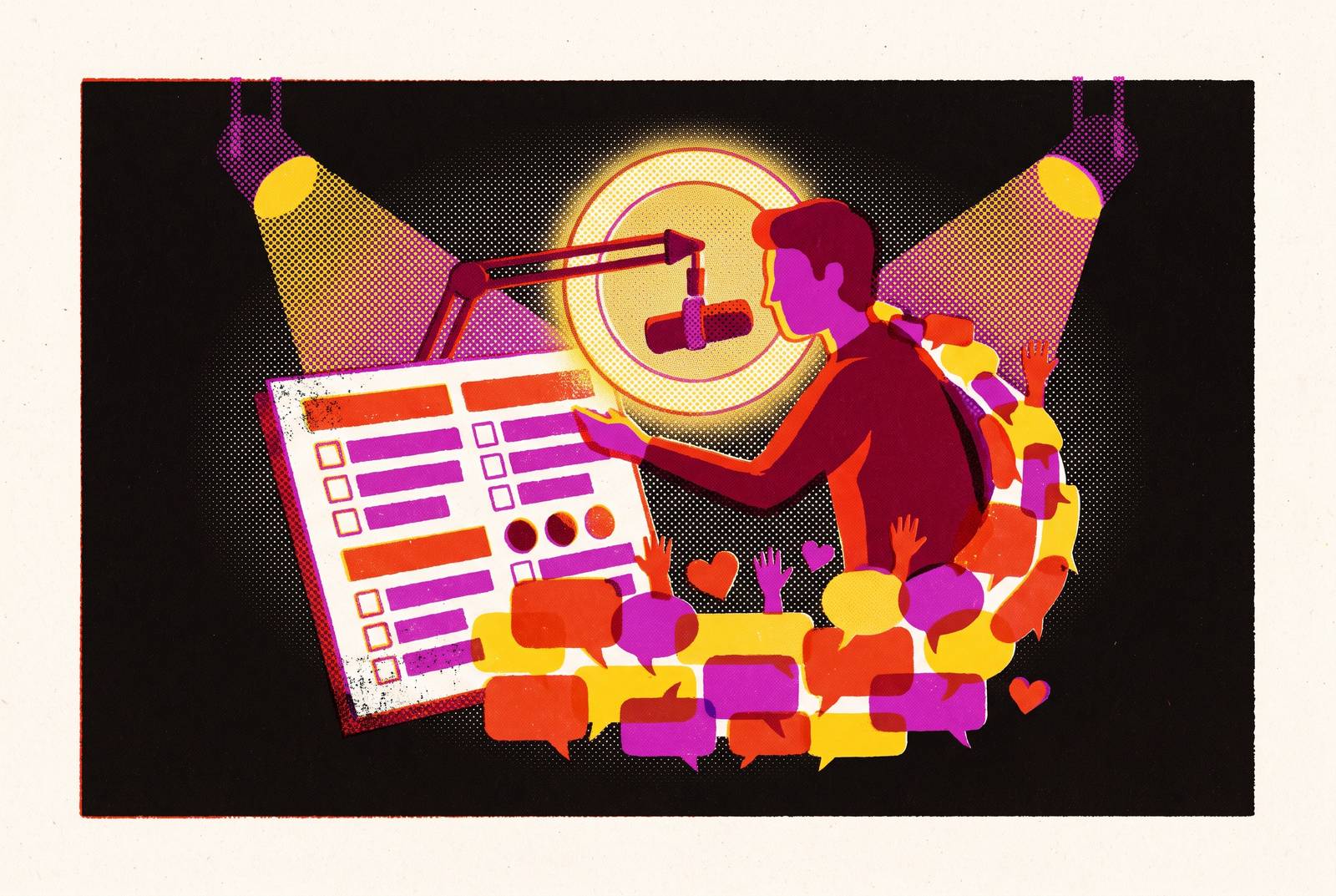
A pre-visible rubric turns AI-judged debate software into interactive chat theater by showing viewers how the round will be scored before the first speech. That timing is the engine of the format. Viewers can predict the score, test the verdict, and follow the competitive consequences because they share an evaluative frame.
What makes a debate round watchable is the gap between a scored contest and a spectator experience
A judged contest does not automatically produce a watchable broadcast. Traditional competitive formats such as Extemporaneous Debate assess performance, organization, evidence, argumentation, questioning, and conduct, but the judge’s framework is not necessarily shared with spectators in real time. The audience hears the arguments without seeing how they will be assessed. Confidence and rhetorical flair become the most accessible signals. Those qualities may command attention without revealing who has answered the strongest objection or supported a claim.
The streamer faces a sharper version of this problem because chat moves in seconds. A verdict that comes after a 30-minute round cannot, on its own, help viewers judge the speeches as they happen. Viewers can cheer their preferred side, but they lack a common basis for distinguishing a persuasive performance from a well-supported argument. That is a design failure. The missing element is a shared frame that lets a live audience do more than cheer.
What a pre-visible rubric actually is, and what distinguishes it from a rubric that is merely published
A pre-visible rubric is a set of scoring criteria made available to the audience and debaters before the round begins. Publication alone does not meet that definition. Criteria revealed with the verdict can explain a result, but they cannot guide attention during an opening speech that has already happened. Pre-visibility is therefore a timing property. It transfers the evaluative frame before anyone makes an argument.
The Extemporaneous Debate rubric illustrates the distinction. Its 30-point scale covers performance, organization, evidence, argumentation, questioning, and conduct, with criteria defined before the contest but typically held only by the judge. A pre-visible version gives spectators that lens before the opening speech. They can then track evidence or responsiveness as each exchange unfolds. The first consequence is not agreement with the judge, but the ability to form an independent running score.
Consistency extends that ability across sessions. When rounds use the same criteria and scale, returning viewers can develop a stable sense of what a strong rebuttal looks like and what a dropped argument costs. Ranking rules also shape that reference point. Where only a debater’s best round counts and live and AI rounds are marked separately, those distinctions tell viewers what the displayed scores represent.
How AI judging delivers the pre-visible rubric as a live broadcast feature, not just a post-round report
AI judging can turn the rubric from a static document into a scoring surface that responds during the broadcast. Rebuttal Live scores each argument as it lands, and the match result affects an ELO rank on a global leaderboard. The criteria can therefore be applied while the audience is still interpreting the exchange. Speed changes the role of the verdict. Instead of arriving outside the broadcast’s active window, it becomes part of the action viewers are following.
Debate Ladder uses a voice-first format and scores logic, responsiveness, clarity, delivery, and persuasiveness, then picks a winner and names what to fix. The verdict comes within seconds of the final speech. Human judging, by contrast, can take hours or days depending on availability. The shorter feedback loop preserves the connection between what viewers remember hearing and what the judge rewards.
A written decision makes that connection inspectable. When it cites which warrants landed, which arguments were dropped, or which rebuttals attacked a conclusion rather than a link, chat has more than a winner’s name to discuss. With the rules visible beforehand, the decision resolves predictions viewers have already formed. Without that early look at the rules, viewers get even an instant verdict without having helped work out what it means.
Why a shared evaluative frame turns passive viewers into active co-judges
A spectator who expects rebuttal quality to affect the score can notice an unanswered argument and flag it before the judge does. That creates a live act of prediction. If the verdict agrees, the viewer can compare the reasoning with their own assessment. If it diverges, the viewer can identify the criterion they believe the judge underweighted.
Both outcomes sustain participation, but not all disagreement has the same value. Viewers can check a complaint that the judge missed a response against the speech and rubric, but there is no such test for disappointment that a favorite speaker lost. The audience becomes a group of co-judges whose vote need not decide the result. Perikto gives participation a place in the format through timed video turns with audiences reacting live. The theater effect comes specifically from combining AI judging with advance criteria and rapid scoring.
A persistent leaderboard gives those judgments consequences across broadcasts. Viewers can track whether a round changes a debater’s rank, linking it to the rounds that came before. The stakes extend beyond the closing speech. Where top-ranked players can be selected to debate creators and streamers live, qualifying rounds also become part of a visible competitive path. The audience has a reason to follow both the argument being made and the opportunity its score may open.
The bias problem in AI judging and why the pre-visible rubric is the streamer's practical answer to it
AI judging does not become fair merely because it is fast. A 2026 AI debate tournament experiment found that the final speaker had a 62.6% win rate regardless of side, and every judge favored the final speaker to some degree. A 2026 study across multiple models also found that advanced capability did not reduce self-preference bias and could worsen it. A published rubric cannot erase those tendencies.
It can, however, make an apparent discrepancy open to examination. If the criteria reward rebuttal quality but a decision appears to favor the final speaker’s summary, viewers can describe the mismatch in the judge’s own terms. That is more useful than generalized distrust. A single disputed result does not establish a systematic bias, but the shared frame allows the audience to examine how the criteria were applied. The streamer's practical answer is auditability.
Published scoring rules and appeals to a human reviewer provide structural safeguards for that scrutiny. A platform that earns nothing based on who wins also separates its financial return from the result. A three-model panel, with independent scores averaged, can reduce the influence of any one model’s bias, although that does not establish that shared biases disappear. Explaining this architecture before the round gives viewers another basis for interpreting the verdict. Critical participation then concerns the reliability of the judgment as well as the quality of the debate.
How streamers structure a pre-rubric broadcast as live theater
For a streamer putting this format into practice, the sequence begins with the rubric reveal and topic selection. The rubric should be shown before the topic is chosen or right afterward, so viewers know the criteria before either debater speaks. Randomtopics.app/debate generates arguable motions with pro and con talking points for free, with no signup, and repeats no topic until the whole pool has been seen. Topic selection can therefore become an audience moment. The rubric gives that moment a purpose by letting viewers consider the motion through the terms on which it will be judged.
During the round, a browser-based layout can keep the rubric, timer, and live score visible together. Viewers need not leave the stream to recover the evaluative frame. The verdict then leads into a chat audit of the cited arguments. Where rank can lead to creator matches, the broadcast also needs to make those stakes clear. Selection based on rank, topic, and timing gives the audience a concrete reason to follow qualifying performances.
Bantr, a live audio and video debate platform in open beta, permits account-free watching while requiring a free account for polling, chat, or a request to speak. The host approves or denies those requests. Debatr has short timed video turns and lets viewers vote during open debate, then shows the results live.
Automated chat responses complicate the audit because they can be indistinguishable from genuine audience evaluation. AI chat engagement tools are contentious among creators for that reason. The practical response is to make the discussion task specific. Asking viewers to name dropped arguments steers chat toward what was said in the round and away from general reactions. It supports the format’s purpose without proving that every response is authentic.
What the pre-visible rubric does to the debaters themselves when an audience is watching
A rubric-equipped audience changes the incentives of the performance. Debaters have a reason to make their structure legible because viewers can compare a confident delivery with the arguments it leaves unanswered. Rhetorical force no longer supplies the only visible signal. A concession, a missing response, or a clear link between evidence and conclusion becomes something the audience can recognize.
The audience’s role also changes the practice environment. Real-time comments can surface a structural problem while the exchange is still fresh, adding detail that a winner-only verdict would omit. In that sense, chat can function as a distributed coaching layer. Its usefulness depends on viewers applying the criteria rather than merely expressing approval, so audience feedback is not automatically expert feedback. The shared rubric gives that feedback a common vocabulary and makes it possible to distinguish a specific diagnosis from applause.
The chess comparison is useful because spectators who can see the board can name a mistake. A pre-visible rubric provides a comparable reference for identifying an argumentative omission. For practice, public criteria and instant judging also remove the requirement to have a coach available for every round. Pre-visible, AI-judged practice on a public leaderboard is structurally accessible in a way that practice dependent on membership in a well-funded, coached team is not.
What separates a debate platform that enables streamer theater from one that merely supports a live round
The practical test for a platform follows from the format’s requirements. Are the criteria visible before the first speech, and does the verdict cite specific arguments? Does a leaderboard carry over from one session to the next, and can ranked competition lead to live creator matches? These are distinct capabilities. A service can support a compelling live exchange without supplying the full architecture for rubric-led, continuing competition.
Bantr lets people watch without an account, assigns pro/con positions, and has live polls that show how the audience split changes. Its free tier caps duration, stage capacity, and room access, which constrain the broadcast formats that tier can accommodate. ArguFight has ELO rankings, bracket tournaments, and championship belts by category, but the description provided leaves unclear whether viewers can see the rubric in the same way. Rebuttal Live supplies argument-level scoring and real-time ELO updates. Those capabilities establish speed and competitive continuity, but do not by themselves establish how explicitly spectators receive the criteria before a round.
A streamer evaluating these options should distinguish participation features from judging transparency and competitive progression. Published rules, citable decisions, and human appeals make the score inspectable, while persistent rankings and creator selection make it consequential beyond one broadcast. Neither group substitutes for the other. The defining mechanism starts before the first argument and remains available through the audience’s audit of the result. The pre-visible rubric is the engine, and AI speed, the leaderboard, and the creator pipeline are what that engine powers.